
Running a Sex Offender Check in Hardee County
The Florida Sexual Offenders and Predators Search is the primary official public source. It supports name and place searches, including a county list without a name. The official Hardee County SO app also advertises sex-offender information, but FDLE remains the statewide registry custodian.
Use a name when checking a specific person, or select Hardee County to review qualifying public entries tied to the county. Treat location as a reported registry fact, not a guarantee that a person is present at that moment.
Build a Hardee County Search Without a Name
FDLE requires at least one of first name, last name, city, county, or ZIP. Leaving the name blank and selecting Hardee produces a county-focused list. Partial names are accepted, and selected results can be placed in a printer-friendly PDF, with a limit of 25 records at once.
The official FDLE search form is shown in this source image.
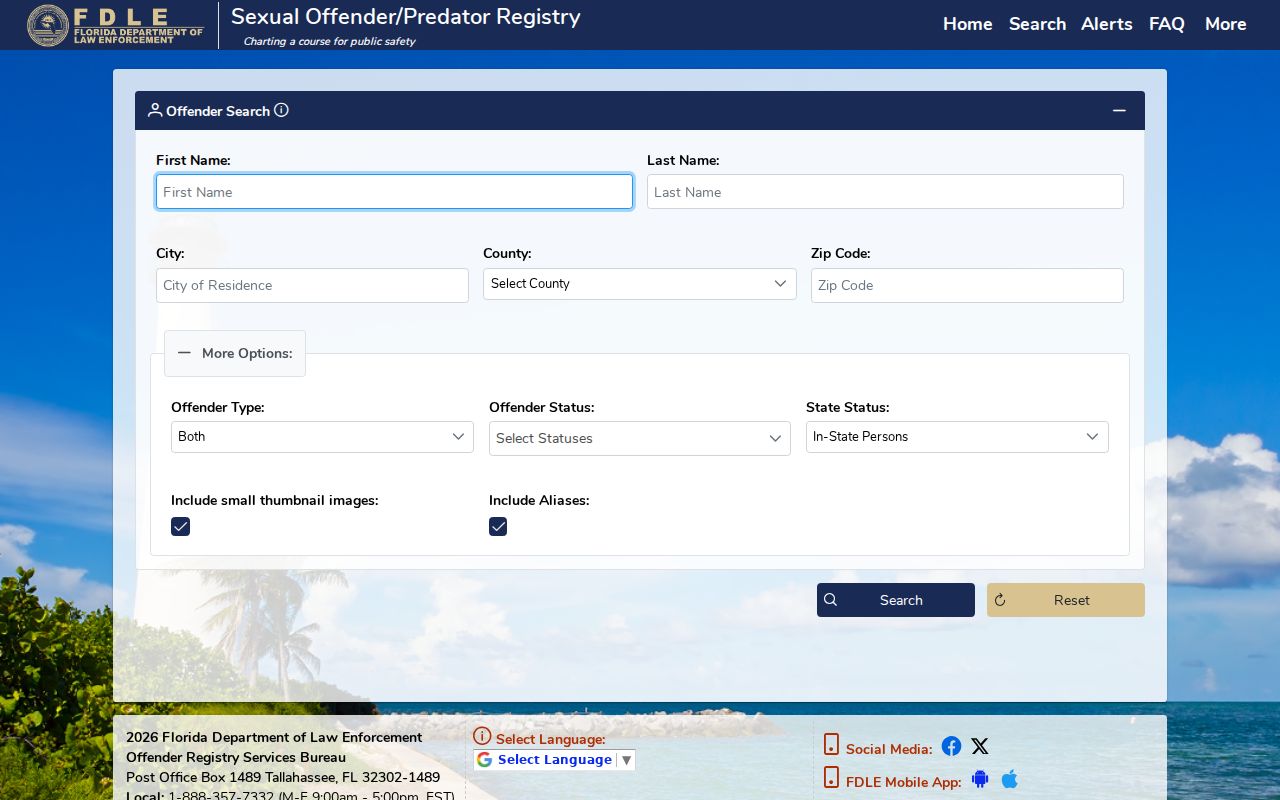
The county selector is useful for community awareness because it does not require guessing a person's spelling.
Searching the Florida Sexual Offenders and Predators Search
FDLE's Offender Registry Services Bureau manages the public system and updates it as partner agencies report changes. Other modes cover university or campus searches and email or Internet identifiers.
- Open FDLE's official registry and review its use notice.
- Enter a name or select Hardee County, a city, or a ZIP code.
- Compare the result list by identity, designation, status, and location.
- Open the flyer and read the offense and registration details in context.
| Field Label | Type | Required | Notes |
|---|---|---|---|
| Last Name | Text | One of five | Full or partial |
| First Name | Text | One of five | Full or partial |
| City | Text or list | One of five | Can list a city without a name |
| County | Select | One of five | Select Hardee |
| ZIP | Text | One of five | Creates a location list |
Hardee Registration Starts at Summit Street
Qualifying residents and visitors register with the Hardee County Sheriff's Office at 900 East Summit Street in Wauchula. Call (863) 773-0304 because official research did not establish registration-unit hours, an appointment rule, or a fee.
New residents and qualifying visitors must report within Florida's statutory 48-hour periods and update driver-license records as required. Suspected noncompliance or an incorrect Hardee address should be reported to local law enforcement, not handled through personal confrontation.
What a Registry Profile Shows
The public flyer separates information meant for awareness from sensitive information collected for law enforcement. It can show a photo, designation, status, physical description, qualifying crime, and registered address.
| Name & Aliases | Identity names released by FDLE |
|---|---|
| Photo & Physical Description | Photo, build, hair, eyes, marks, and other public traits |
| Registered Address | Reported residence or other published location status |
| Offense & Statute | Qualifying crime and conviction place or date |
| Classification | Florida sexual offender or court-designated sexual predator |
| Registration Status | Released, incarcerated, supervised, absconded, deported, deceased, or other listed status |
Florida Offender Alerts Near Hardee
Florida Offender Alert emails notice when a registrant moves within a user-selected distance of a location or when a tracked registrant moves within Florida.
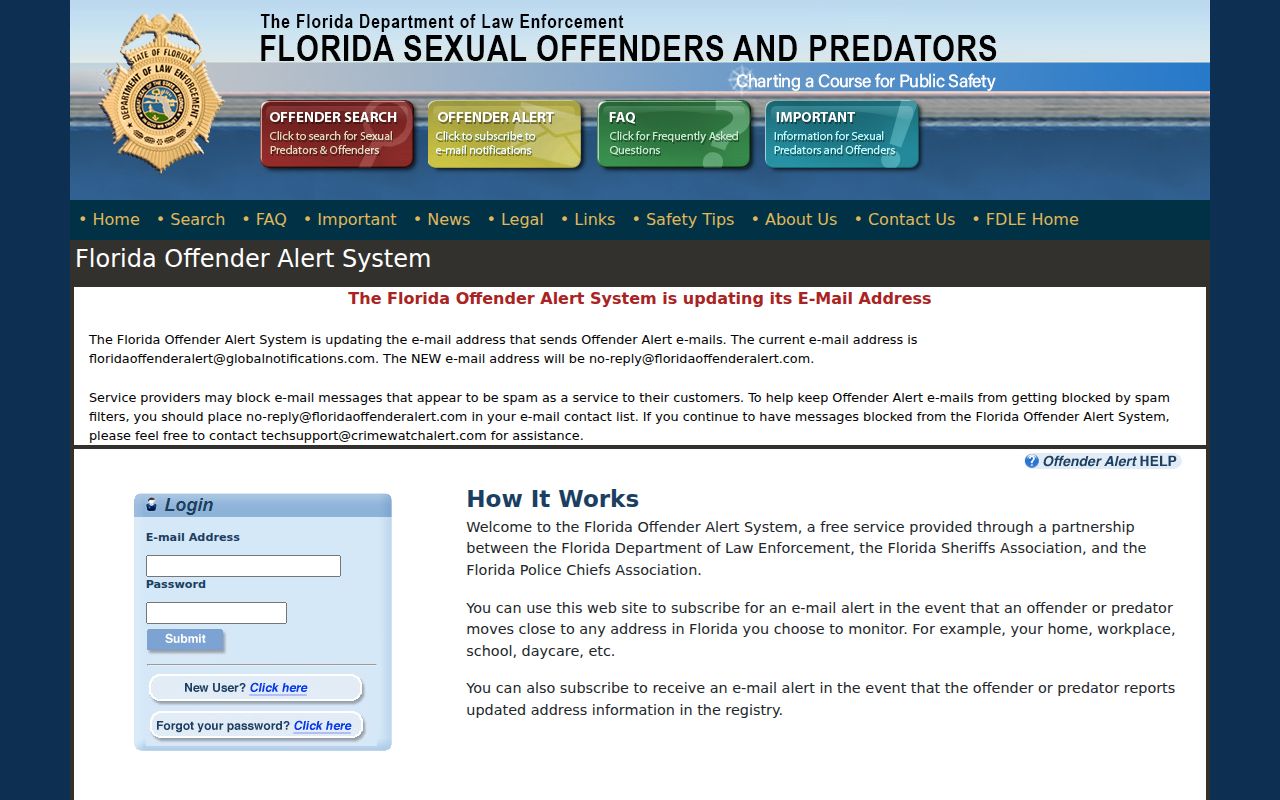
The alert is a monitoring aid, not a substitute for opening the current FDLE profile and reviewing its status.
Registration Requirements and Levels in Florida
Florida does not publish SORNA Tier I, II, and III labels. It uses sexual offender under section 943.0435 and court-designated sexual predator under section 775.21. Lifetime registration is the baseline, with narrow statutory relief.
| Level / Tier | Duration | Verification Frequency |
|---|---|---|
| Sexual predator | Lifetime baseline | Four times yearly |
| Sexual offender | Lifetime baseline; narrow petition after at least 25 sanction-free years | Usually twice yearly; listed offenses four times yearly |
| Qualifying juvenile registrant | As Florida law provides | Generally four times yearly |
| Out-of-state basis | Until proof that duty ended and no Florida basis remains | Depends on Florida classification |
NSOPW Beyond Florida
The National Sex Offender Public Website searches participating jurisdictions when a concern crosses Florida's border.
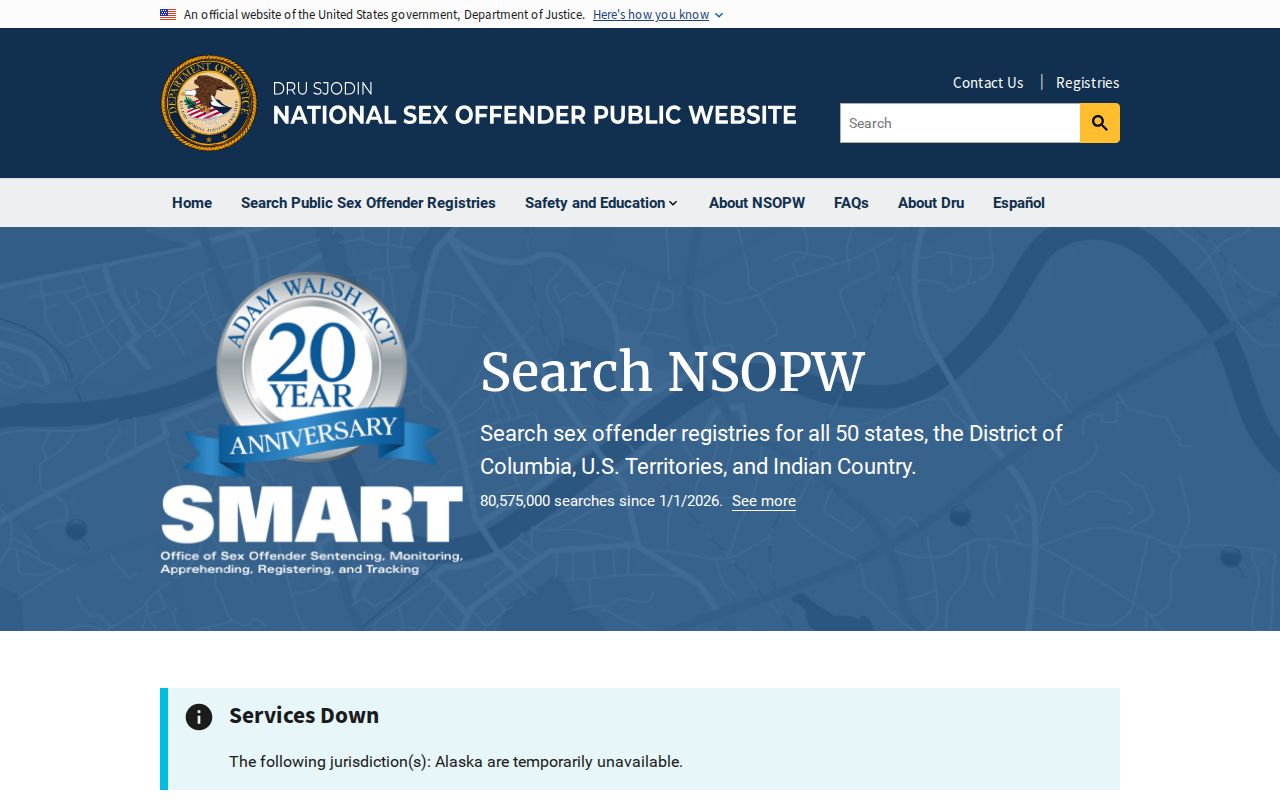
Use FDLE for the Florida profile and NSOPW for the broader layer because the systems have different geographic coverage.
Profiles Can Remain After Departure
A profile's presence does not always mean the person currently lives at the displayed Hardee County address. FDLE documents status categories for incarceration, absconding, deportation, and death, and some profiles remain visible after departure or death.
Read status and address together. If the reported location appears wrong, notify HCSO or the agency serving that location so officials can verify it.
Lawful Use and Community Notification
The registry supports personal, family, and community safety planning. It does not authorize threats, harassment, vigilantism, misrepresentation, or using information to facilitate a crime. Official alert and law-enforcement channels are the safe response to a concern.
Registry misuse can be illegal: FDLE warns against misuse, and section 775.21 makes specified misuse or misrepresentation of predator information unlawful.
Registry information is intended for personal, family, and community safety. Florida law makes specified misuse or misrepresentation unlawful, and FDLE warns that predator information cannot be used to facilitate a crime. Do not harass, threaten, discriminate against, or attempt to confront anyone based on a search result. Contact law enforcement about an immediate safety concern or suspected registration violation.
The public flyer and the data collected during registration are not identical. A flyer may show a photograph, offender or predator designation, current status, physical description, qualifying offense, and registered address. FDLE also collects sensitive identifiers and contact details that are not necessarily displayed publicly. The absence of a collected field from the flyer is therefore not proof that the agency lacks it.
Reporting frequency depends on Florida classification and qualifying offense. A sexual predator generally reports in person four times yearly. A sexual offender generally reports twice yearly, although listed offenses require four-times-yearly reporting. Qualifying juvenile registrants generally report four times yearly. Out-of-state duties can continue until the person proves that the other jurisdiction ended its requirement and no independent Florida basis remains.
Lifetime registration is the general baseline. Florida law provides a narrow petition route for some sexual offenders after at least 25 years without a sanction, subject to statutory conditions and exclusions. Predator relief is considerably narrower and depends on the governing designation and postconviction rules. A profile should not be treated as removable merely because a sentence or supervision period ended.
Residency restrictions require separate attention. State statutes, any valid local rule, and individualized probation or community-control conditions can impose different boundaries. The registry reports information; it does not merge every court order or supervision condition into a single explanation. Read the sentencing docket when the legal basis or duration of a restriction matters.
The Hardee sheriff is the local registration and compliance contact, while FDLE maintains the statewide public database. If a profile points to a conviction in Hardee County, the clerk's Civitek docket may provide the public case history. It should be used to understand the judicial record, not to second-guess the registry's current status field.
Registry data updates continuously as partner agencies report changes, while a court docket follows its own filing schedule. The two sources therefore should not be expected to refresh at the same moment. Save the search date, open the current profile again before relying on an address, and report suspected errors through official channels.
For a search covering more than Florida, repeat the name and location review through NSOPW. Differences should be resolved with the registry agency that owns the entry, not with a commercial directory.